Community Rail Awards 2025 now open for Entries! Click here to read more.
Community Rail Lancashire (CRL) identified an opportunity to harness two landmark railway anniversaries – 50 years since Queen Elizabeth II inaugurated the electrification of the West Coast Main Line to Glasgow in 1974 at Preston Station, and the Railway 200 celebrations, marking two centuries since the birth of the modern passenger railway – to inspire learning and illustrate how rail education can both honour the past and shape a sustainable future, inspiring climate action and environmental responsibility among young people.
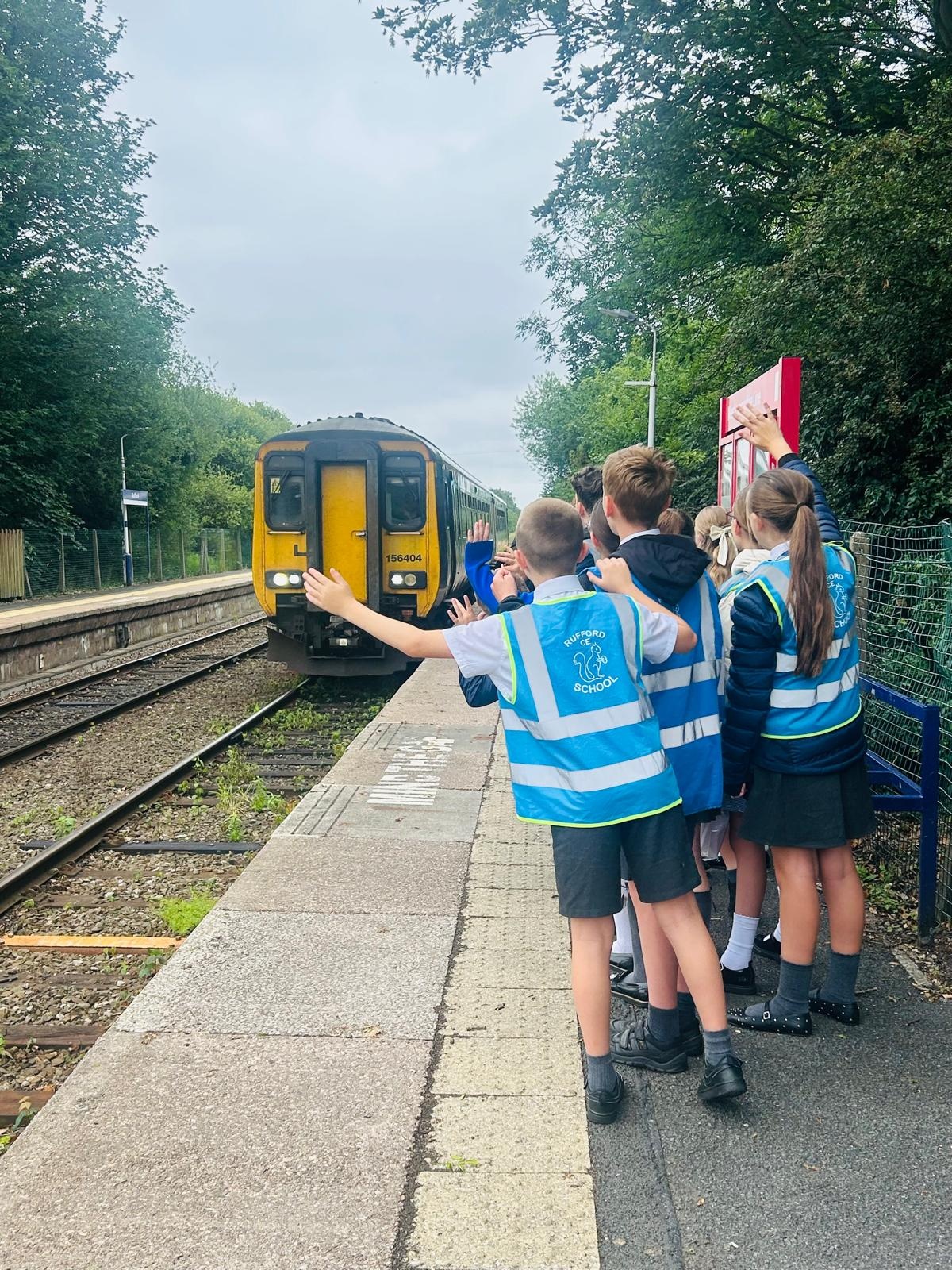
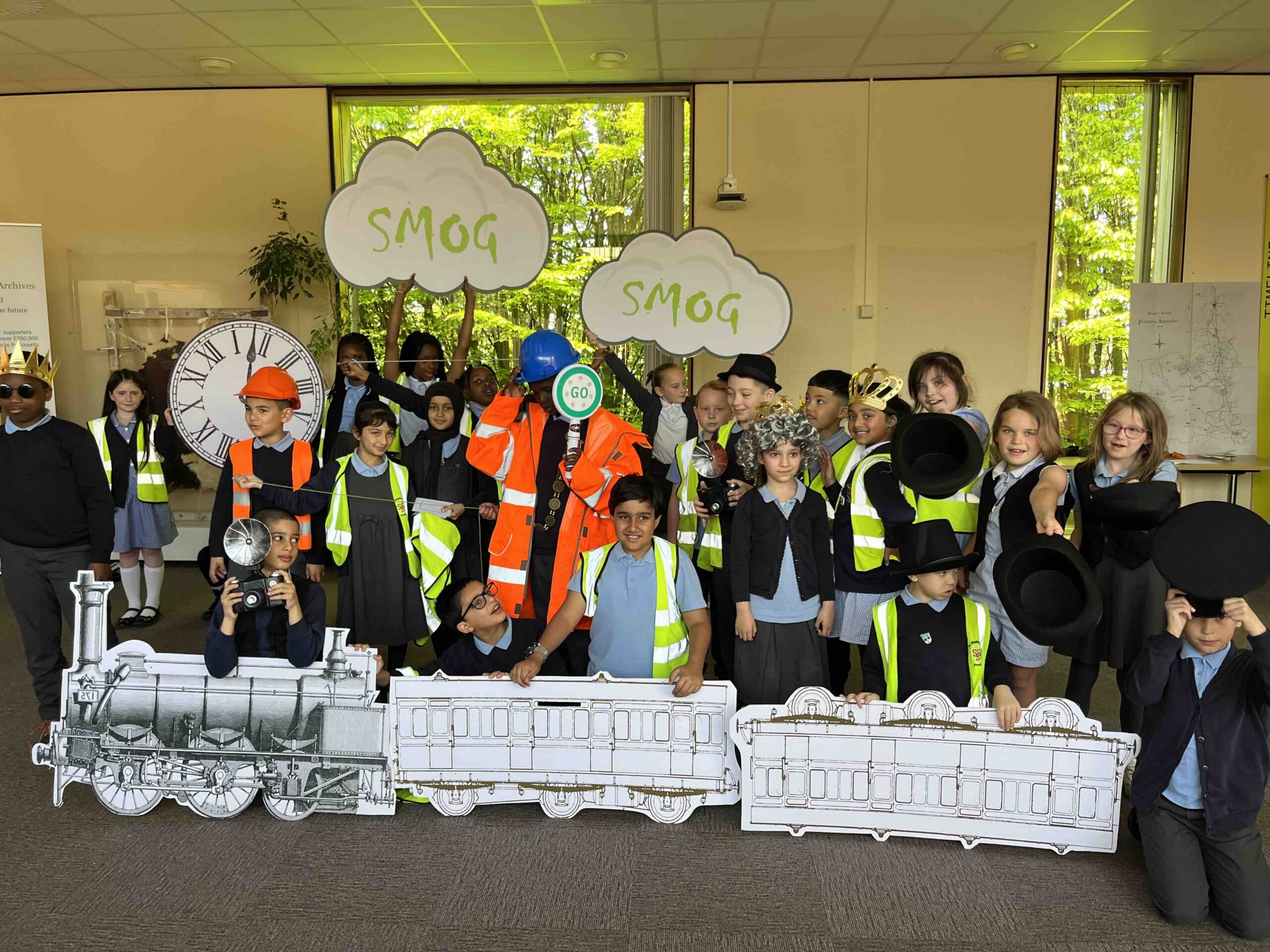
Partnerships with Lancashire Archives and Preston Station were key to providing authentic learning experiences that embedded railway heritage into education on climate action and sustainable travel. Key Stage 2 pupils from four schools experienced guided tours of Preston Station, before walking to Lancashire Archives for immersive workshops featuring role-play, period costumes and storytelling that traced railway evolution from steam to electrification and beyond.
Supporting resources were produced for long-term and future use. The Preston Station ‘I-Spy’ booklet was designed to reinforce safety and environmental messaging, while portable exhibition materials and school resource packs (including ‘Steam to Green’ posters, Railway 200 commemorative materials, and Northern Heritage publications) ensured lessons extended beyond the workshops.
The project successfully reached more than 100 pupils from diverse backgrounds, with the content proving suitable for use across the whole of Key Stage 2 – enabling broader engagement than first anticipated. Evidence of behavioural change is also emerging, with schools requesting follow-up sustainability sessions, and the workshops have been permanently embedded into Lancashire Archives’ education programme.
In summer 2024, serious youth antisocial behaviour at Bridgwater Station escalated rapidly from low‑level disruption to dangerous incidents, including trespass, vandalism and emergency brake misuse. The behaviour posed significant risks to young people, staff and passengers, and began affecting nearby communities. With many of the children vulnerable, living in poverty and at risk of exploitation, a coordinated safeguarding response was urgently required.
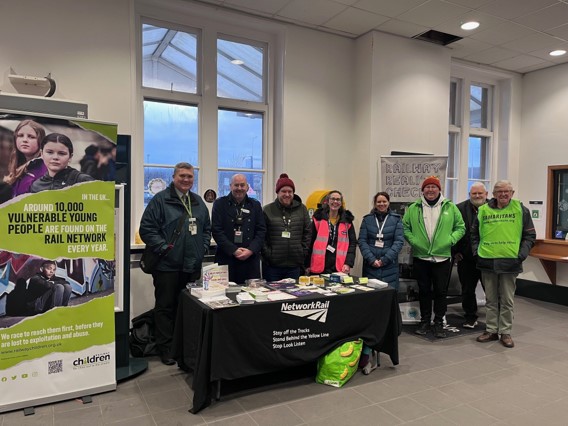
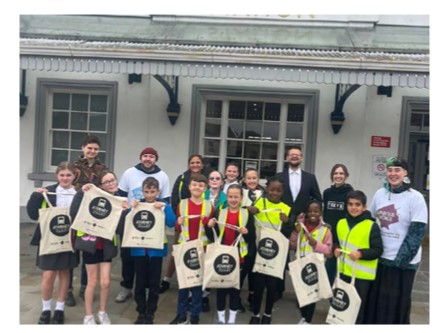
Severnside CRP, supported by Great Western Railway, worked with more than 20 organisations including Network Rail, British Transport Police, local authorities, youth services and charities on a series of initiatives that focused on positive communication and building trust and relationships with the young people. These included regular visits to a local Pupil Referral Unit, a bespoke early‑intervention workshop for students aged 11-12 delivered by Unique Voice, community engagement days and a full contextual safeguarding assessment by Railway Children.
The impact has been significant. Youth‑related anti-social behaviour on the route fell from an average of 22 monthly incidents (peaking at 31) to just seven within a year. Staff confidence has increased, young people have started re‑engaging positively (with one even completing a work experience day), and several are now working with youth services.
The project has inspired long‑term legacy work, including the development of a Bold & Brave café at the station to provide hands‑on skills and employment pathways. Great Western Railway has also shared the model nationally through a safeguarding conference. This partnership‑led approach demonstrates the transformative power of early intervention, collaboration and community‑focused rail.
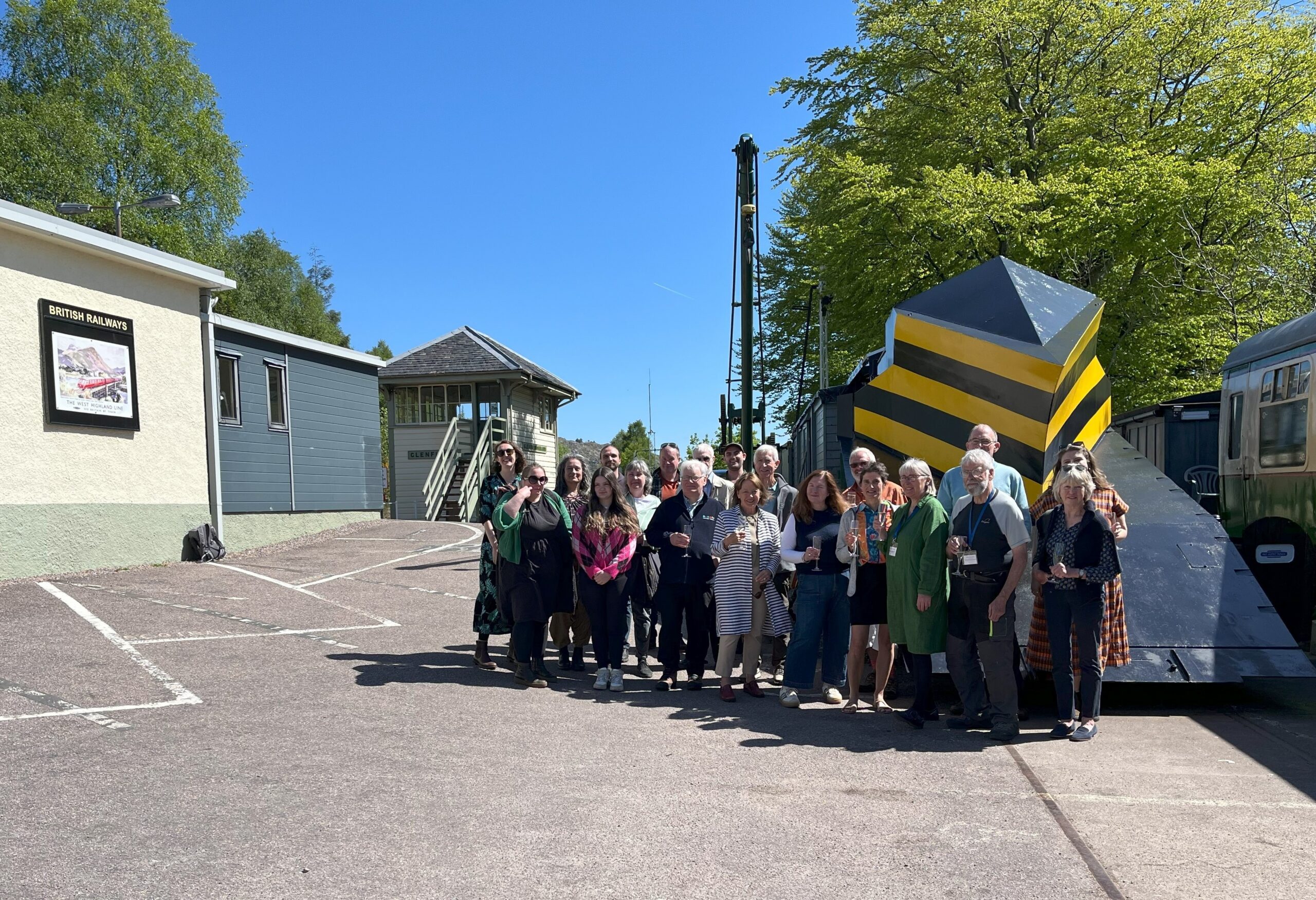
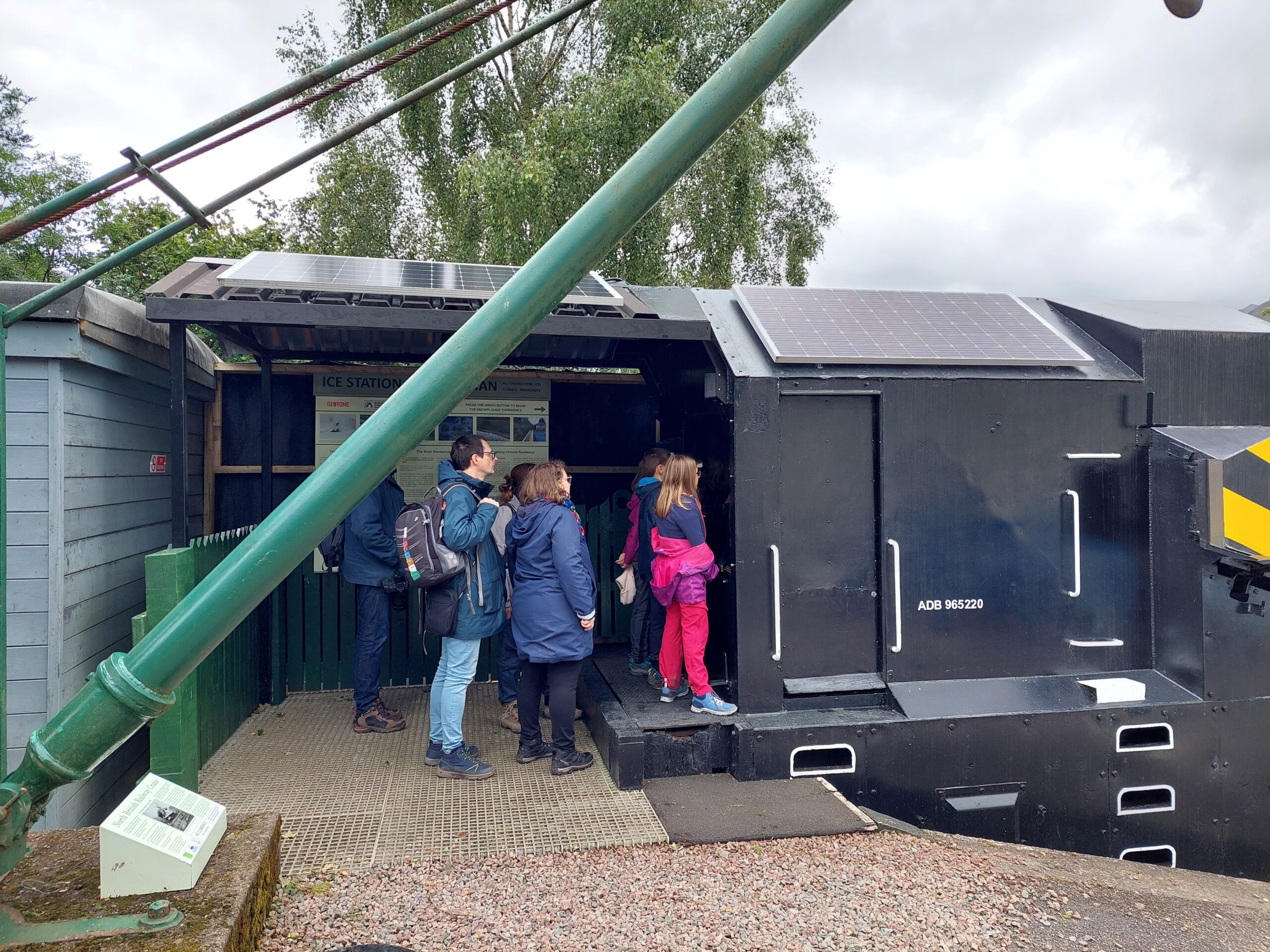
Glenfinnan Station Museum sits on one of Scotland’s most iconic rail routes, where thousands of visitors come to see the famous Glenfinnan Viaduct and often spend long periods waiting between trains. To turn this downtime into meaningful engagement, the museum created the Solar Snowplough: a striking, open‑all‑hours climate‑themed exhibition housed inside a restored 1936 railway snowplough.
The plough was transformed into an immersive space featuring historic objects, a short film on extreme weather events, and information panels linking past snow‑clearing efforts with today’s realities of flooding, landslips and climate risk on the West Highland Line. The entire display runs on solar power generated by panels mounted on the volunteer‑built shelter structure made from repurposed materials, showcasing sustainability in action and reinforcing the exhibition’s message that rail travel is vital to a low‑carbon future.
In the first three months since it opened in May 2025, the Solar Snowplough has been activated 2,524 times, with an estimated 5,000 visitors engaging with its content, proving especially popular during steam‑train stops when hundreds explore the station.
Survey findings have shown that the exhibition has increased the museum’s reach by around 20%, drawing in audiences even when the main museum is closed. The project has been widely praised for its creativity, climate leadership and ability to connect the history of Scotland’s railway with the environmental challenges it faces today.
The Solar Snowplough stands as an inventive, memorable way to communicate a crucial message: climate action is urgent, and rail can be part of the solution.