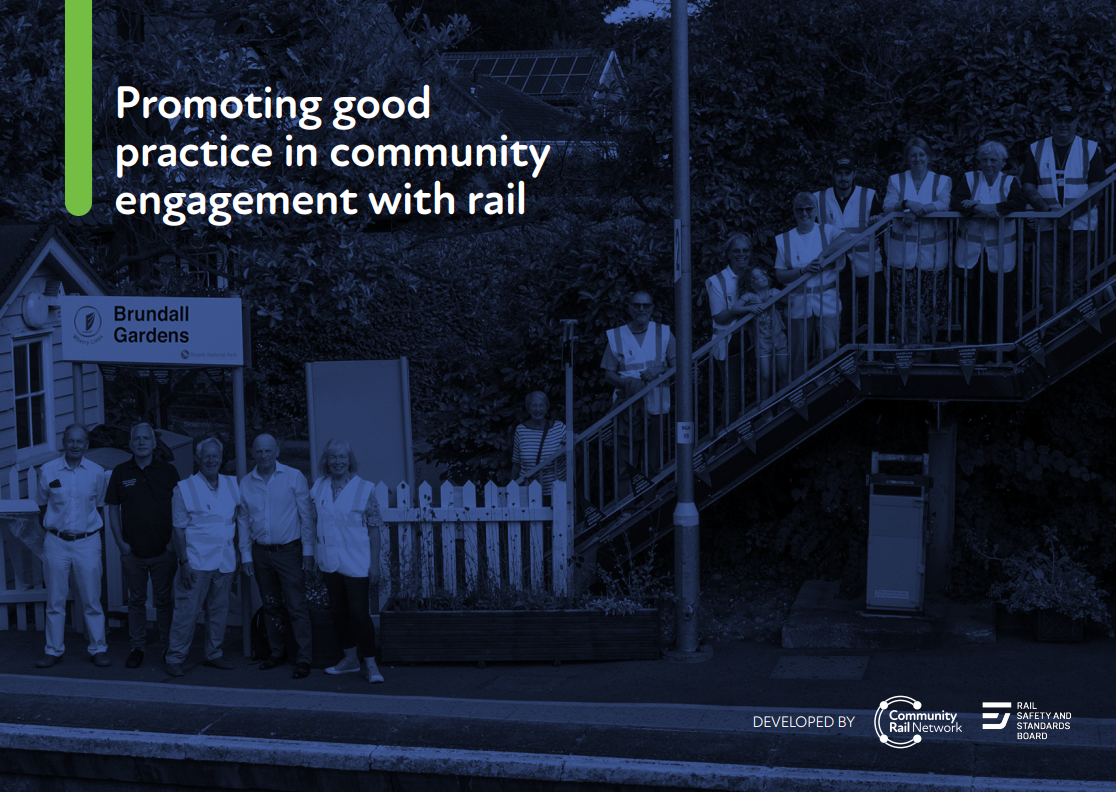
This Community Rail Network report, supported by the Rail Safety Standards Board (RSSB), offers ideas and insights on how the rail sector might develop its approach to community engagement. This forms a key part of the sector’s work to deliver greater social value from rail and a more rounded approach to sustainability, aligning with the Sustainable Rail Blueprint.
RSSB’s Social Sustainability Working Group (SSWG) commissioned this report having identified community engagement as a key workstream to focus on, in the context of a new government embarking on rail reform. It is designed to support organisations working across any part of the sector to use community engagement to deliver a better, more sustainable, inclusive rail network, supporting the Government’s vision of a railway more responsive to local needs.
As reform progresses, this report can be used to advance thinking on how community engagement can be used to create impact against the core long-term objectives for rail including: supporting local economic development; reducing inequalities and improving community connectivity; and supporting modal shift and multi-modal integration.
Community Rail Network conducted research with SSWG members and others across the rail sector from March to September 2025, to:
Below are findings on the importance and benefits of community engagement with rail, and opportunities to progress this. The research points to a shift being needed, from relying on individual passion to institutional commitment, driven by policy and legislation.
The report also offers recommendations on how community engagement can be better supported long-term, highlighting the need for clear leadership, especially to ensure community engagement is embedded through the changes under rail reform.
Community engagement in rail remains a developing area, and as such, this report is designed to be a ‘live’ resource to be updated to reflect ongoing progress. If railway organisations have lessons to share, or innovative or exemplar policies, practices or initiatives that could help guide future development across any of our themes, contact Rob Lowson.
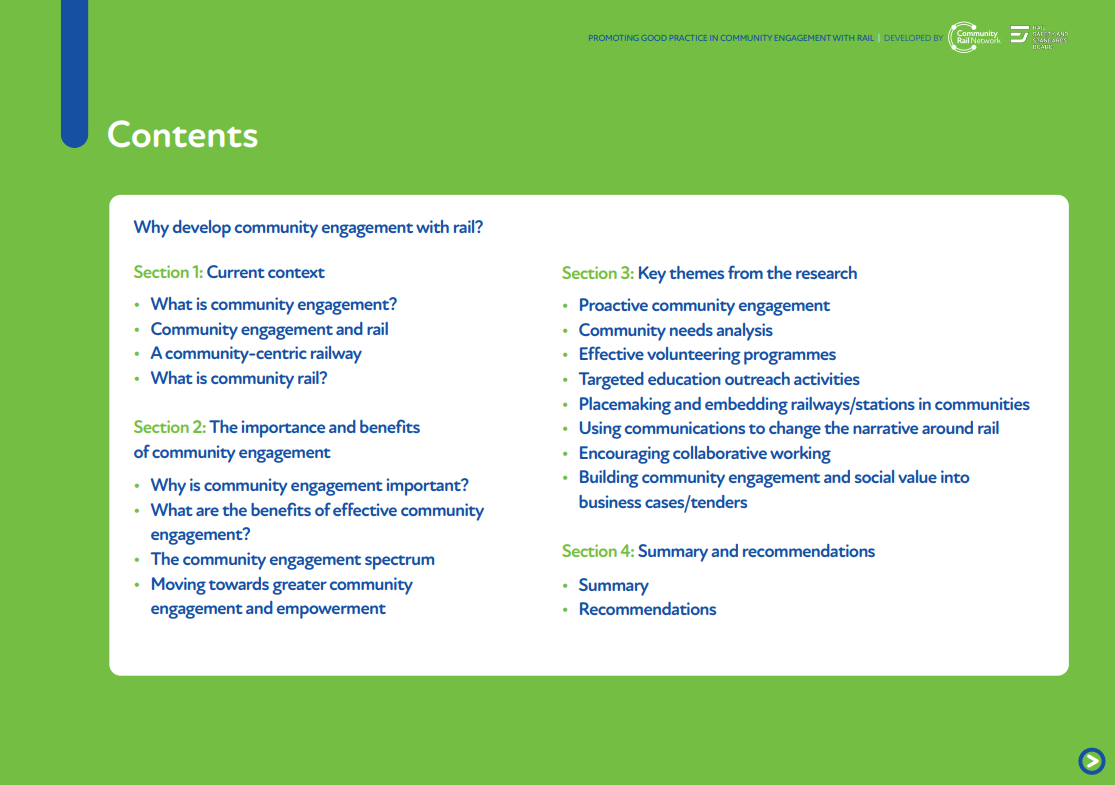
Why develop community engagement with rail?
The importance and benefits of community engagement
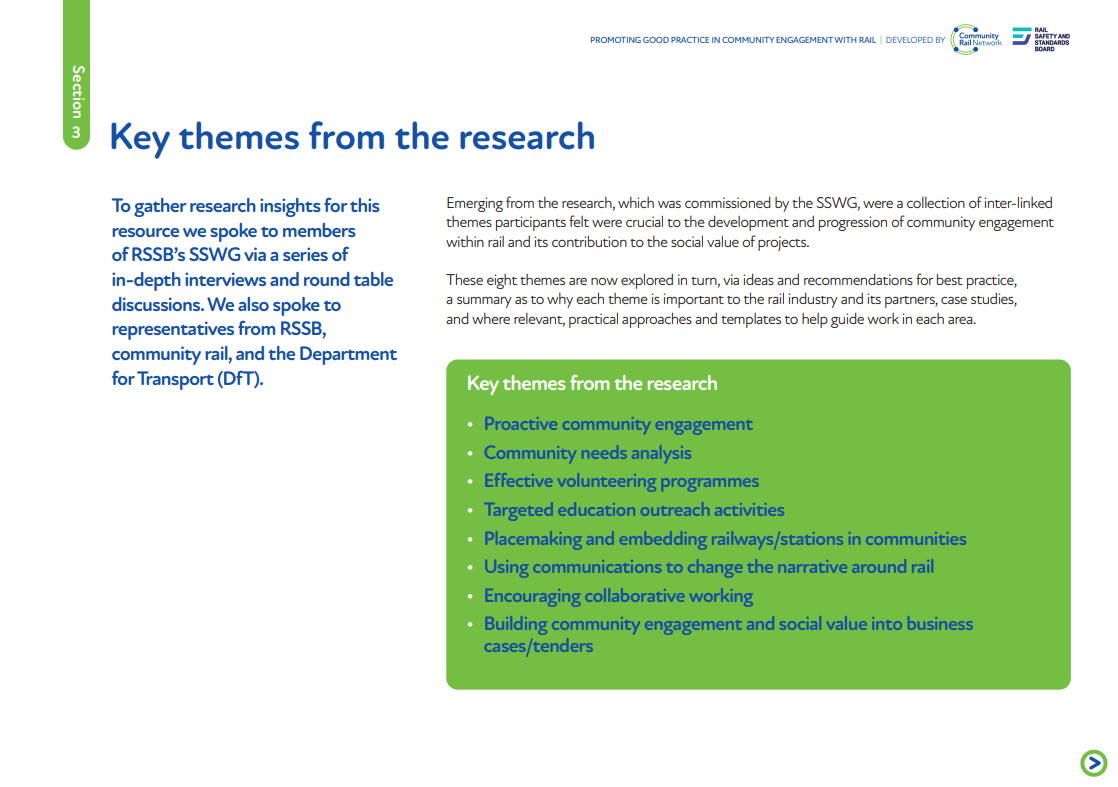
Theme A – Proactive community engagement
Theme B – Community needs analysis
Theme C – Effective volunteering
Theme D – Targeted educational outreach
Theme E – Placemaking and embedding rail
Theme F – Changing the narrative
Theme G – Collaborative working
Theme H – Business cases and tenders